
Dell Accessible Learning 2.0
Situation
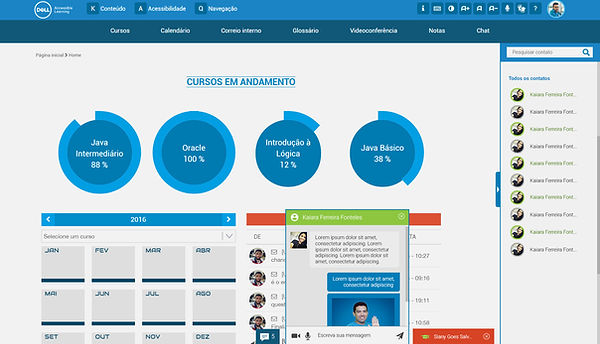
From 2016 to 2019, Dell's e-learning platform: "Dell Accessible Learning", served employees and students with visual, hearing, and motor disabilities across a diverse curriculum ranging from Java development to Brazilian Sign Language (Libras) and English courses. However, the absence of structured design methodologies had led to severe visual inconsistencies and accessibility failures, all systematically documented by Dell's own internal team of 50 professionals with disabilities who tested both the platform and its learning materials. The product was falling short of Nielsen's usability heuristics, WCAG 2.1 compliance, and screen reader compatibility, creating real barriers for its core audience.

Task
As main Product Designer, working through a university-backed consultancy, lead the UX evolution of the platform across Agile sprint cycles, bringing it into full WCAG 2.1 compliance, establishing design consistency at scale, and creating an accessible experience for students across desktop, mobile, and tablet.
Action
Led a design team that grew exponentially in line with the expansion of course offerings and platform demand;
Mapped and addressed platform inconsistencies against Nielsen's usability heuristics and WCAG 2.1 guidelines, prioritizing issues documented by Dell's internal accessibility testing team;
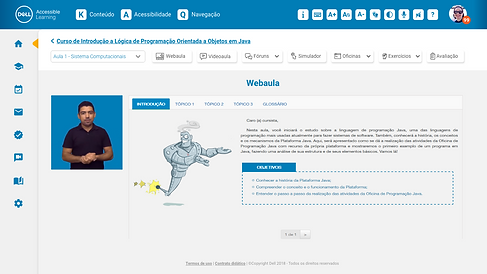
Built and maintained an accessible Design System to ensure consistency across sprint cycles and reduce dependency on individual contributors;
Facilitated and participated in co-creation workshops with Dell's 50-person team of professionals with disabilities, iterating on navigation components and course content based on direct user input
Conducted usability testing with assistive technologies including screen readers and Libras translation tools, in close collaboration with development, QA, content, and learning teams through structured Design Critique sessions
Researched emerging assistive technologies, including Augmented Reality, wearables, and virtual assistants, to inform the platform's future roadmap


Results
The UX evolution driven by assistive technology testing raised the platform's SUS (System Usability Scale) score from 55 to 74 points, moving it from below average to good. The platform reached over 5,000 enrolled students, achieved a 67% course completion rate, and offered more than 1,000 hours of professional qualification content. Student satisfaction with the platform reached 89%. Courses were certified in partnership with the State University of Ceará (UECE), adding institutional credibility to the program and expanding its reach beyond Dell's internal workforce.