Design Ops Alelo
Situation
From 2021 to 2025, Alelo — one of Brazil's largest benefits ecosystems, serving 8 million B2C consumers and 150,000 B2B companies, operated with UX designers embedded in business towers without a dedicated governance structure, generating visual inconsistencies, long delivery cycles, and high rework rates across platforms. The absence of standardized processes, templates, and design rituals limited the scalability and quality of design across the entire ecosystem.
Task
As Design Ops Lead, restructure how design operated across the entire organization — building 4 dedicated Design Squads from scratch, establishing governance, rituals, and processes, and scaling design quality and delivery velocity across the ecosystem.
Action
Restructured design operations by removing UX designers from direct business tower control and establishing 4 dedicated Design Squads — B2B, B2C, Commercial Establishments, and Cross (E-commerce and Backoffice) — focused exclusively on design governance;
Organized rituals, processes, and communication frameworks for the newly formed Design Squads, ensuring alignment across all business units;
Created 21 design templates and frameworks — ranging from operational tools such as Briefing and Demand Definition to strategic frameworks including AARRR and HEART — increasing artifact consistency and improving designer efficiency in workshops and alignment sessions by 50%;
Oversaw adoption of the Design System — built on Meiuca's SaaS platform — monitoring delivery rhythm, component consistency, and material quality across squads via Azure DevOps boards;
Tracked and optimized Lead Time and Cycle Time metrics across all 4 Design Squads, reducing average Lead Time by 45% (from 20 to 11 days) and average Cycle Time by 42% (from 12 to 7 days);
Led the delivery of 251 Design System components alongside an individual component pricing framework

Results
Lead Time reduced by 45% across all Design Squads — from 20 to 11 days on average;
Cycle Time reduced by 42% — from 12 to 7 days on average;
251 Design System components delivered, alongside a component pricing framework generating an estimated R$5 million in operational savings;
21 templates and frameworks increased artifact consistency and improved designer efficiency in workshops and alignment sessions by 50%;
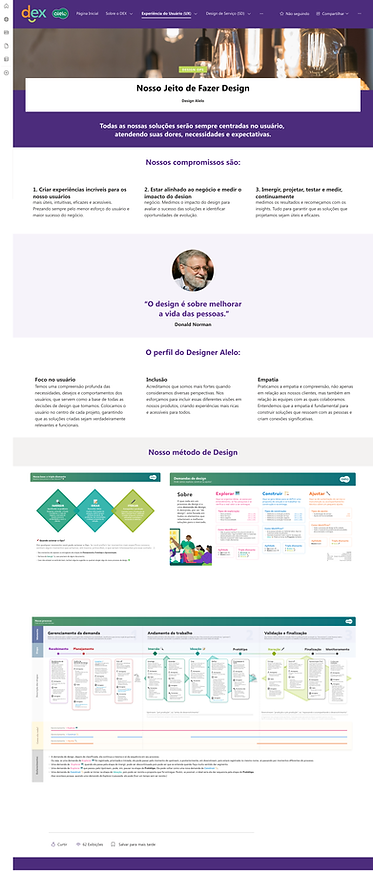
Launched a Design Team intranet page centralizing all day-to-day materials, processes, and content in a single reference hub for the entire design organization;
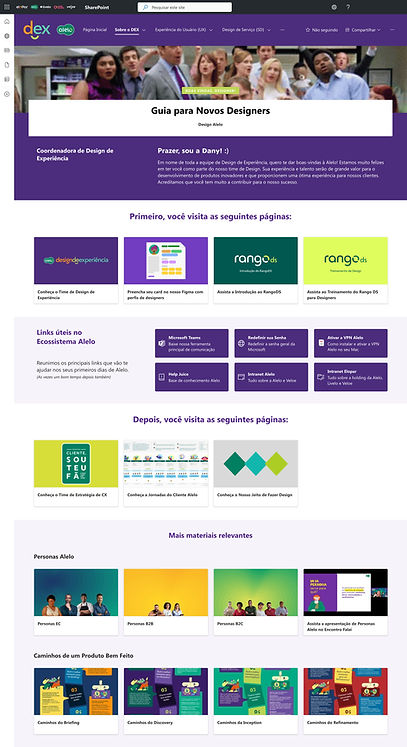
Developed a dedicated designer onboarding page, ensuring new team members could ramp up quickly and consistently from day one